Bilona Method vs. Conventional Method: Understanding the Difference in Ghee Preparation
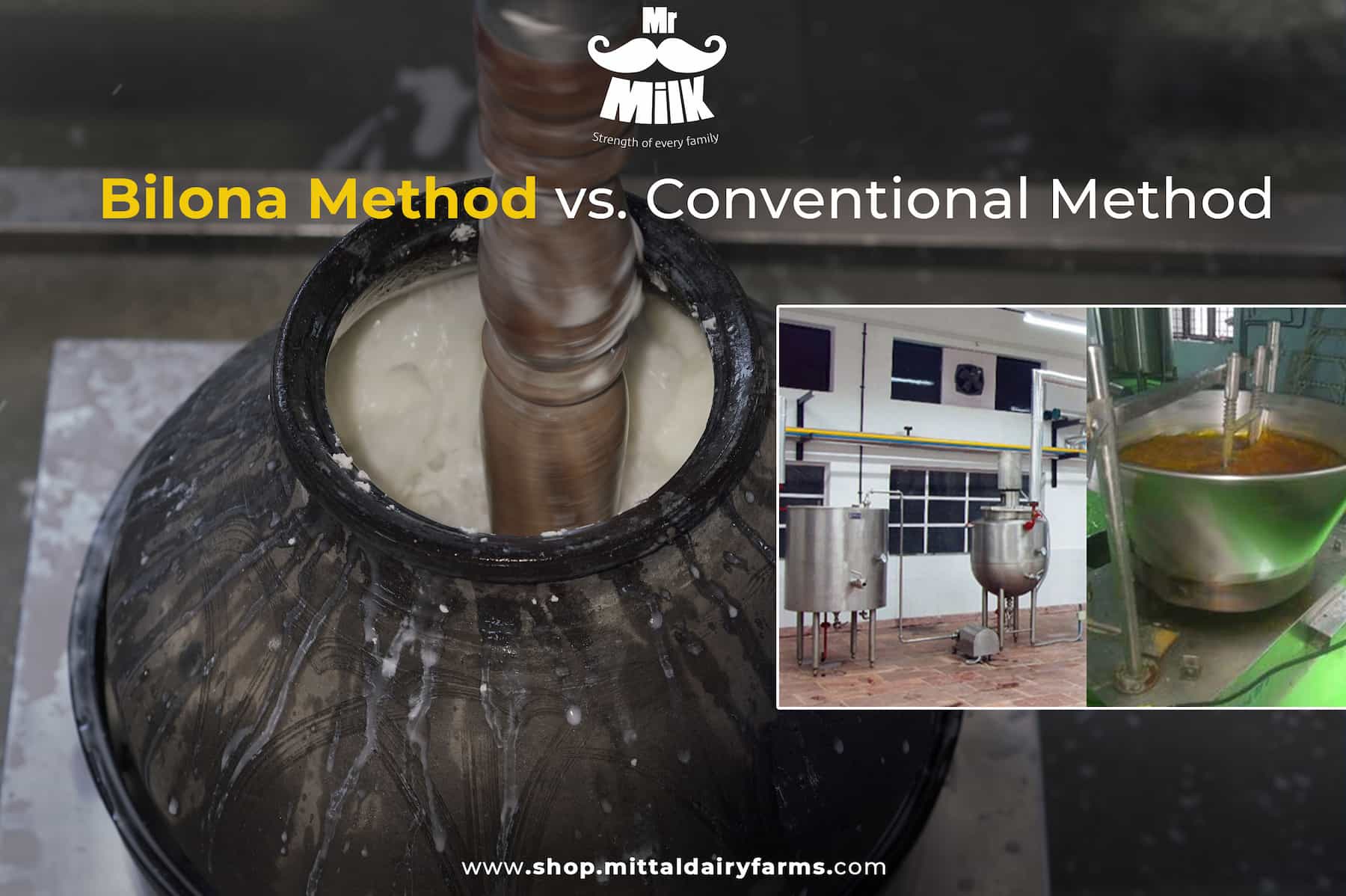
Summary: The choice between Bilona and Conventional ghee is a choice between a cultured superfood and a simple cooking fat. Bilona Ghee follows an ancient Ayurvedic process where A2 milk is fermented into curd before being churned into butter. This "curd-to-butter" method preserves live enzymes and increases Butyric acid levels. Conventional Ghee, however, is mass-produced by separating cream from milk via centrifuges, missing the critical fermentation stage. Mr. Milk’s Bilona A2 Ghee offers superior digestibility, a rich "Danedaar" texture, and the full nutritional profile of indigenous Gir cow milk.
Key Highlights:
- The Fermentation Factor: Bilona ghee involves culturing milk into curd, a step entirely skipped in industrial cream-based ghee.
- Slow-Churned Purity: Uses a bi-directional wooden churner (Bilona) to maintain the molecular integrity of the fats.
- Digestive Benefits: The culturing process removes more lactose and casein than industrial melting, making it safer for sensitive guts.
- Nutrient Retention: Slow-heating over low flames ensures heat-sensitive Vitamins A, D, E, and K are not destroyed.
- Aromatic Profile: Naturally develops a nutty, rich aroma through the caramelisation of cultured milk solids.
When it comes to ghee, the traditional Indian clarified butter, there are two main methods of preparation: the Bilona method and the conventional method. Both have their unique processes, benefits, and flavours.
Let's dive into the differences between these two methods to help you make an informed choice for your kitchen.
The Bilona Method: A Time-Honored Tradition
The Bilona method is an ancient technique used to make ghee that has been passed down through generations. This traditional process involves several careful steps to ensure the highest quality and most nutritious ghee.
- Milk Collection: The Bilona method begins with fresh, raw A2 Desi Cow Milk from indigenous cows like Gir and Sahiwal. This milk, rich in A2 beta-casein protein, boasts high nutrient content and butterfat levels, making it the perfect base for ghee production.
- Curdling: The milk is left to naturally curdle, often with the help of a small amount of curd (dahi). This process allows the milk to ferment and develop beneficial bacteria, enhancing its nutritional value.
- Churning: Once curdled, the milk is churned using a traditional wooden churner or 'Bilona.' This step separates the butter from the buttermilk. The churning process is slow and labour-intensive, but it ensures that the butter extracted is pure and rich in flavour.
- Heating: The collected butter is then gently heated to remove any remaining moisture. This results in the golden, aromatic ghee that is loved for its rich taste and health benefits.
Why is it better? - The fermentation step breaks down milk proteins and sugars, making the resulting fat highly bioavailable and rich in probiotics (though the bacteria die during heating, their beneficial metabolites remain).
The Conventional Method: Modern & Efficient
The conventional method of making ghee is more modern and involves industrial processes designed for efficiency and scale. Here’s how it typically works:
- Milk Processing: In the conventional method, milk is first pasteurized to kill any harmful bacteria. This milk is usually sourced from large dairy farms and may come from a variety of breeds, not just indigenous cows.
- Cream Separation: The milk is then separated into cream and skim milk using a centrifuge. The cream, which has a higher fat content, is used to make ghee.
- Butter Production: The cream is churned in machines to produce butter. This process is much faster than the traditional Bilona method and is suited for large-scale production.
- Ghee Preparation: The butter is heated in large industrial vessels to produce ghee. While this method is efficient, it may not capture the same depth of flavour and nutritional benefits as the traditional Bilona method.
The Downside: Without the curdling process, the ghee lacks the depth of flavour, the "Danedaar" texture, and the high Butyric acid concentration found in Bilona ghee.
Key Differences and Benefits:
- Flavour and Aroma: Ghee made using the Bilona method has a distinct, rich flavour and aroma due to the traditional churning process. It is often preferred for its depth of taste and authentic experience. In contrast, ghee from the conventional method might lack some of these subtle qualities.
- Nutritional Value: The Bilona method preserves the nutrients and beneficial bacteria present in the curdled milk, offering a more wholesome product. The conventional method, while efficient, may not retain all the nutritional benefits of the original milk.
- Traditional Touch: The Bilona method is a labour-intensive process that reflects a deep-rooted tradition and craftsmanship. This conventional touch is valued by those who appreciate the cultural and historical significance of their food.
- Purity and Quality: A2 Ghee made through the Bilona method often uses milk from indigenous cows known for their superior milk quality. This can result in a purer and more nutritious product than the mixed-milk ghee from conventional methods.
Process Comparison: At a Glance
| Feature | Conventional Processed Ghee | Mr. Milk Bilona A2 Ghee |
|---|---|---|
| Base Ingredient | Fresh Milk Cream | Fermented Whole-Milk Curd |
| Churning Tool | High-speed Steel Blades | Slow Wooden Bilona |
| Nutritional Depth | Standard healthy fat | High Butyric Acid & Enzymes |
| Texture | Often smooth or waxy | Naturally Grainy (Danedaar) |
| Aroma | Mild/Neutral | Rich, Nutty, and Toasted |
Why Choose Bilona Method Ghee?
If you’re looking for ghee that is not only rich in flavour but also packed with nutritional benefits, choosing A2 Desi Cow Ghee made using the Bilona method is a wise choice. The traditional process ensures that you get a product that is authentic, pure, and deeply rooted in Indian culinary heritage.
Order your A2 Desi Cow Ghee made using the traditional Bilona method today!
Experience the richness and authenticity of time-honoured craftsmanship in every spoonful. Visit our website to place your order and savour the true taste of tradition!
Frequently Asked Questions (FAQs):
Q.1: Why is Bilona Ghee more expensive than regular ghee?It’s a matter of yield and time. It takes approximately 25 – 30 litres of A2 milk to produce just 1 liter of Bilona Ghee. The conventional cream method is much higher-yielding and faster, whereas the Bilona method requires a 24-hour fermentation cycle and labour-intensive churning.
Q.2: Is Bilona Ghee actually "hand-made"?While we use mechanised Bilona churners to ensure consistency and hygiene, the process remains traditional. We follow the bi-directional churning motion (clockwise and anti-clockwise) that a human hand would use, preserving the molecular structure of the butter.
Q.3: How do I know if my milk is actually from Gir cows?At Mr. Milk, we operate a single-origin farm near Lonavla. We don’t “aggregate” milk from unknown sources. Our Gir and Sahiwal cows are traceable, and we invite our customers to visit the farm to see our ethical practices.
Q.4: Does boiling A2 milk or heating Ghee destroy its protein structure?The A2 protein is very stable. In the Bilona process, the curdling actually helps “pre-digest” the proteins. During the final heating of the ghee, we use a controlled, slow-flame method to ensure the nutrients are preserved rather than “burnt” by high industrial heat.
Q.5: Why is the "curdling" step so important?Curdling (fermentation) is the soul of Ghee. It creates a higher concentration of conjugated linoleic acid (CLA) and short-chain fatty acids. This makes Bilona ghee a digestive aid, whereas cream-ghee is just a cooking medium.
Q.6: Can I use Bilona Ghee for deep frying?Yes. Bilona Ghee has one of the highest smoke points (250°C). Because it is highly purified through the traditional process, it doesn’t break down into toxins as easily as refined vegetable oils.
Q.7: Why is Bilona Ghee better for lactose-intolerant people?The double-process of fermentation (turning milk to curd) followed by clarification (turning butter to ghee) removes virtually all traces of lactose and casein, making it much safer than industrial ghee.
Q.8: How should I store Bilona Ghee to maintain its aroma?Always store it in a glass jar in a cool, dry place. Avoid using a wet spoon. Glass does not react with the fats, ensuring that the nutty Bilona aroma stays intact for months.
Taste the Purity of Tradition
Why settle for mass-produced fat when you can have a cultured superfood? Bring home the authentic, hand-churned goodness of Mr. Milk.
Free Shipping All Over India!
Order NowEnjoyed this article?
Experience authentic Bilona-crafted A2 Desi Cow Ghee — made the traditional way, delivered fresh to your door.
Author
Mr. Milk Team
Traditional dairy experts specialising in authentic A2 Desi Cow Ghee made using the ancient Bilona process. Passionate about farm-to-table nutrition, Ayurvedic food wisdom, and supporting indigenous Indian cow breeds.
More from Mr. Milk